Completed2025Design, web development, data analysis, and modeling
Depression Project
Web application combining data analysis, machine learning, advanced statistics and visualization to identify depression-related risk factors.
Project overview
A data analysis and machine learning project focused on studying sociodemographic and behavioral variables related to depression. The app combines CRUD data management, modeling, analytical visualization, and semantic search.
Current state
- Web application developed with data management and analytical interface.
- Classification, regression, and clustering models implemented.
- Analytical visualizations and statistical exploration integrated.
- Embedding-based semantic search added.
Tech stack
PythonFlaskPandasScikit-learnMongoDBHTML/CSS
Tags & Code
Data ScienceMachine LearningFlaskMongoDB
Private code (academic project)
Vision
- Build a unified platform to explore and analyze depression-related data.
- Highlight relationships between behavioral, sociodemographic, and risk variables.
- Combine statistical exploration, machine learning models, and visualization in a usable web interface.
Architecture
- Flask web application with CRUD management of sociodemographic data.
- Data processing and storage pipelines using MongoDB Atlas.
- Analytical modules: classification, regression, clustering, and dimensionality reduction (PCA).
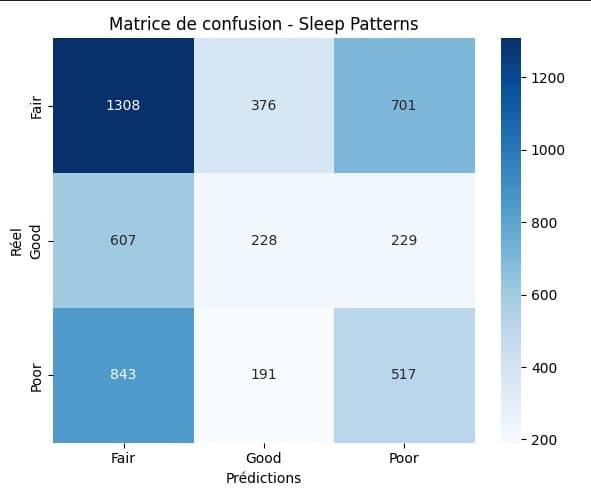
- Result visualization: analytical charts, confusion matrices, statistical exploration.
- Embedding-based semantic search to enrich data exploration.
Roadmap
- Phase 1: structuring and managing sociodemographic data.
- Phase 2: statistical analysis, correlations, and PCA exploration.
- Phase 3: machine learning implementation and result visualization.
- Phase 4: semantic search integration and analytical interface improvement.
Engineering decisions
- Flask for a lightweight architecture suited to a web analytical project.
- MongoDB Atlas for storage flexibility and easy pipeline integration.
- Clear separation between data management, statistical analysis, modeling, and visualization.
- Semantic search to go beyond a simple data viewing interface.
Possible improvements
- Improve the UI to make exploration more intuitive.
- Strengthen comparison between machine learning models.
- Further document pipelines and analytical assumptions.
Lessons learned
- A relevant data project requires as much rigor in data management as in modeling.
- Visualization plays a key role in making results interpretable.
- An analytical web interface makes a scientific project far more usable.
Screenshots
Depression project preview